Tronscan is a practical console for TRON tokens, contracts, and resource math
Tronscan is a TRON network explorer built for checking TRX accounts, TRC-20 transfers, smart contracts, token pages, staking activity, and resource costs in one place. Its most useful angle is operational: it turns raw TRON activity into searchable account records, transaction pages, contract details, token trackers, and calculators for bandwidth and energy, the two resources that shape fees on TRON.
Reading a TRX or USDT transfer from the transaction page
A transaction hash is the fastest path into a specific on-chain event. Paste the hash into the search bar and the explorer opens a record with the sender, receiver, block, timestamp, status, token amount, and resource usage. For a TRX transfer, the page centers on the native coin movement. For USDT on TRON, it shows the TRC-20 token contract interaction behind the transfer.
The status field matters because a broadcast transaction is not the same as a confirmed transaction. A successful record shows that the network accepted the transaction into a block. Failed smart contract transactions still appear, and they still explain which address signed, which contract ran, and what resources were consumed. That makes Tronscan useful when a wallet shows a confusing pending or failed payment.
Token pages separate tickers from contract identity
TRON hosts native TRX plus token standards such as TRC-10 and TRC-20. Search results include popular assets like USDT, ecosystem tokens, and newer meme assets, but the contract address is the piece that identifies a token precisely. Two assets with similar names do not share the same on-chain identity unless the contract address matches.
Token pages collect supply data, holders, transfers, contract information, and market-facing details where available. This is especially important for TRC-20 USDT, because transfers move through a token contract rather than as native TRX. A user checking an exchange deposit, wallet withdrawal, or merchant payment should compare the destination address, token contract, amount, and confirmation status before treating the payment as settled.
Bandwidth and energy explain why TRON fees feel different
TRON does not price every action through a single gas field. Basic transfers draw from bandwidth, while smart contract calls draw from energy and bandwidth together. Accounts receive some bandwidth through the network resource model, and users also obtain resources by staking TRX or by paying fees when resources are short.
The resource calculator inside Tronscan is valuable because contract activity changes the cost profile. Sending TRX is lightweight. Moving a TRC-20 token, interacting with JustLend DAO, swapping through SUN, or using another smart contract requires energy. The calculator gives a concrete preview of the resource side of an action, which is clearer than guessing from a wallet prompt alone.
Using the resource calculator before contract-heavy actions
Start with the action type, the account, and the relevant contract interaction. The calculator turns those inputs into an estimate of energy and bandwidth demand. It does not replace the final wallet confirmation, but it gives the user a readable cost model before signing. That helps when an account holds enough tokens for a transfer but lacks enough TRX or staked resources to cover execution.
A practical pre-send check looks like this:
- Confirm the receiving address matches the intended TRON address.
- Check whether the action is native TRX or a TRC-20 contract call.
- Review the estimated energy and bandwidth consumption.
- Make sure the signing wallet has enough TRX for uncovered resources.
- Open the submitted hash afterward and confirm the final status.
This workflow keeps cost review close to the transaction itself, which is where most user mistakes show up.
Contract pages help users inspect the code-facing side
Contract pages expose addresses, creators, transactions, token behavior, and verification status. When a project verifies its contract, the page becomes easier to inspect because the human-readable code or interface data lines up with the deployed bytecode. For developers, contract verification also gives users and integrators a clearer path to read functions and review activity.
Tronscan also supports contract deployment and contract verification tools, which places it closer to a working developer console than a passive search page. Builders working with TronWeb, TronGrid, TronBox, TronIDE, or Java-tron use explorers to confirm deployments, inspect calls, and troubleshoot contract execution after code leaves the local environment.
Account views show permissions, staking, and asset movement
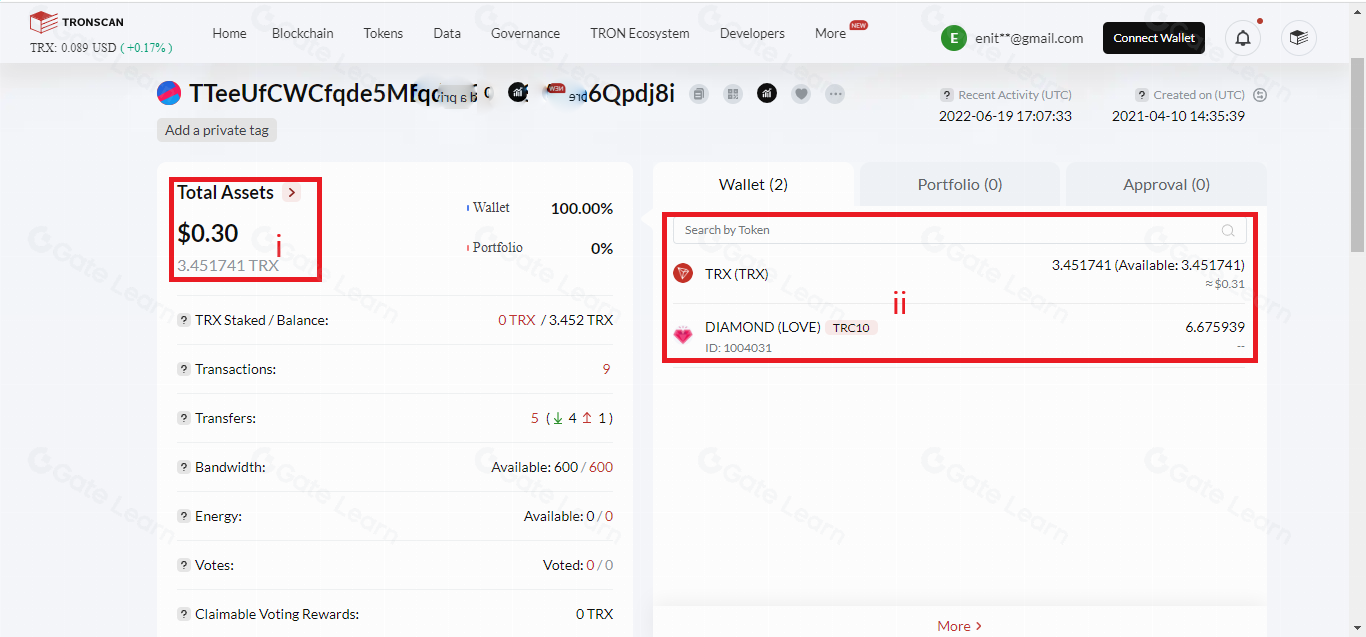
An account page gathers balances, token holdings, transfers, votes, resource totals, and permission settings. That matters because TRON accounts support permission structures beyond a single everyday key. Multisig-style account permissions allow separate owner and active permissions, threshold settings, and multiple keys for sensitive operations.
When reviewing an account, the permissions area deserves attention alongside balances. A compromised active permission changes the risk profile even if the visible token balance looks normal. The same account view also helps track staking decisions, voting for Super Representatives, and resource changes tied to TRX staking. Tronscan makes those account-level details visible without requiring a node setup.
Where token tracker data fits into TRON research
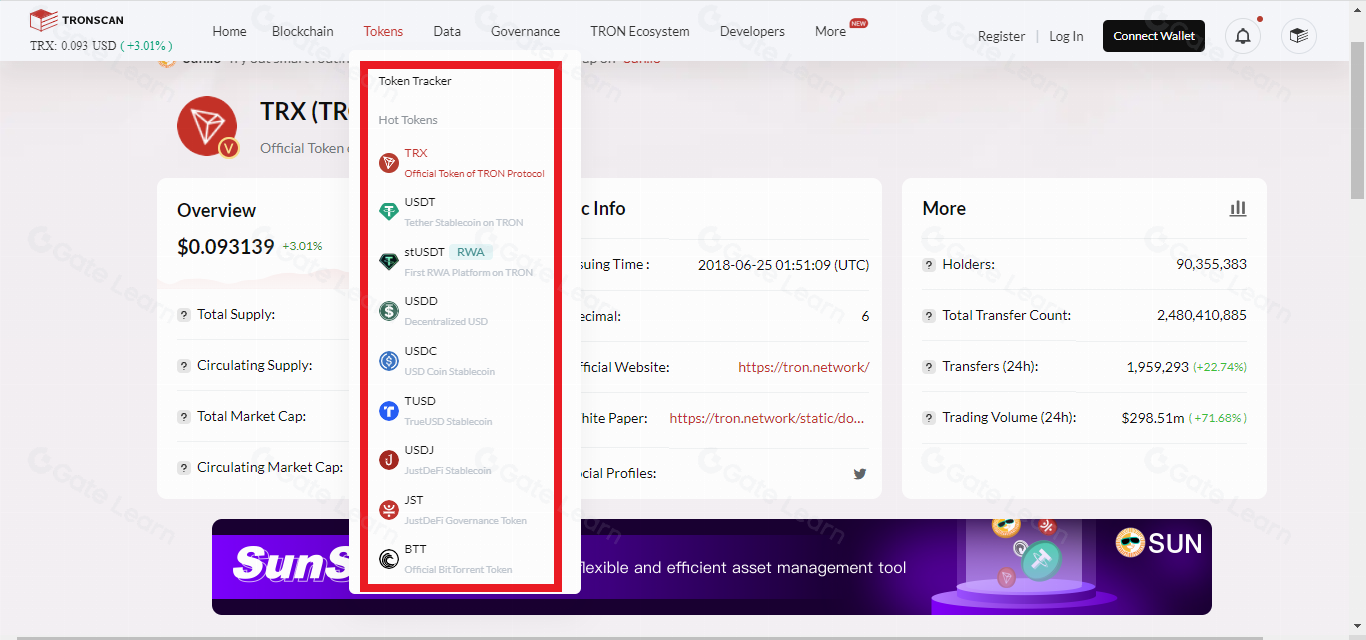
The token tracker and rankings pages give a broad look at holders, hot tokens, top contracts, resource consumption, and transfer patterns. These views suit research tasks: checking whether a token has real transfer activity, seeing whether a contract consumes significant resources, or following stablecoin flows across large addresses.
USDT on TRON drives a large share of everyday network attention, so stablecoin pages and transfer records are especially useful. They show whether a payment used the TRON version of USDT, whether the amount reached the target address, and how the transfer appeared in the block record. The explorer view is also useful when a centralized exchange or wallet support team asks for a transaction hash.
Connecting a wallet changes the page from lookup to workspace
Public lookup requires no wallet connection. Searching a hash, account, block, token, or contract works directly from the page. Connecting through TronLink or another supported login method adds signed actions, such as voting, interacting with contracts, or using account tools that require authorization.
Keep read-only research separate from signed activity. Searching an address does not expose funds, while signing a transaction gives the network an instruction from that account. The safest habit is to inspect first, sign second, and then return to the transaction hash after broadcast. That order turns Tronscan into a record trail for each step rather than a place visited only after something breaks.
Explorer choices when the task is broader than one chain
For TRON-specific work, this explorer gives the cleanest view of TRX, TRC-20 tokens, Super Representative voting, resources, and TRON contract records. When the task crosses chains, other tools enter the workflow. Etherscan covers Ethereum, BscScan covers BNB Smart Chain, and BTTC-related tools help when assets move through BitTorrent Chain routes.
The best choice follows the chain where the transaction actually settled. A USDT transfer on Ethereum belongs in an Ethereum explorer, while a TRC-20 USDT transfer belongs in a TRON explorer. Tronscan fits the second case because it understands TRON addresses, resource usage, token standards, governance, and contract activity as native parts of the same ledger.
Tronscan: questions and answers
- Does a failed TRC-20 transfer still spend energy on TRON?
- Yes. A failed smart contract transaction records execution on-chain and the account still spends the resources used during the attempt. The transaction page shows the failed status, the contract involved, and the resource consumption. That record is useful for diagnosing whether the issue came from insufficient resources, contract execution rules, or an incorrect call from the wallet or app.
- Can I use Tronscan without connecting TronLink?
- Yes. Address lookup, transaction search, token pages, block records, contract pages, charts, and rankings are available as public explorer views. A wallet connection is only needed for signed actions such as voting, contract interaction, permission changes, or other account operations. Read-only checks should be done before connecting a wallet so the user understands the target address and action first.
- Why does a wallet ask for TRX when I am sending a token?
- TRC-20 token transfers are smart contract calls, so the account needs energy and bandwidth. If the account lacks enough staked or available resources, the network charges TRX to cover execution. The token balance itself does not pay that resource cost. Keeping a small TRX balance on the sending account prevents otherwise valid token transfers from failing at the signing stage.
- What happens if I search an exchange deposit hash and nothing appears?
- If the hash does not appear, the transaction might not have been broadcast to TRON, the hash may belong to another chain, or the copied value may be incomplete. Confirm that the withdrawal used the TRON network and that the hash is the transaction ID rather than an internal exchange reference. Once broadcast and indexed, the transaction page shows the block record.
- Resource calculator estimates on Tronscan versus wallet fee prompts, which should I trust?
- Treat the calculator as a planning view and the wallet prompt as the signing-time confirmation. The calculator helps estimate bandwidth and energy before starting a transaction, while the wallet shows the current instruction being signed from the account. If they appear inconsistent, review the contract address, action type, and account resources before approving the transaction.