Tronscan wallet is a TRON address control panel for explorer actions
Tronscan wallet is a TRONSCAN connection experience that links a TRON address to the network explorer for balances, TRX staking, Super Representative votes, token transfers, contract interactions, and resource tracking. It belongs to the TRON account workflow rather than a separate custodial account: the wallet signs actions, while TRONSCAN displays blockchain data, prepares transactions, broadcasts signed messages, and shows how bandwidth and energy affect on-chain costs.
Reading a TRON account from the explorer screen
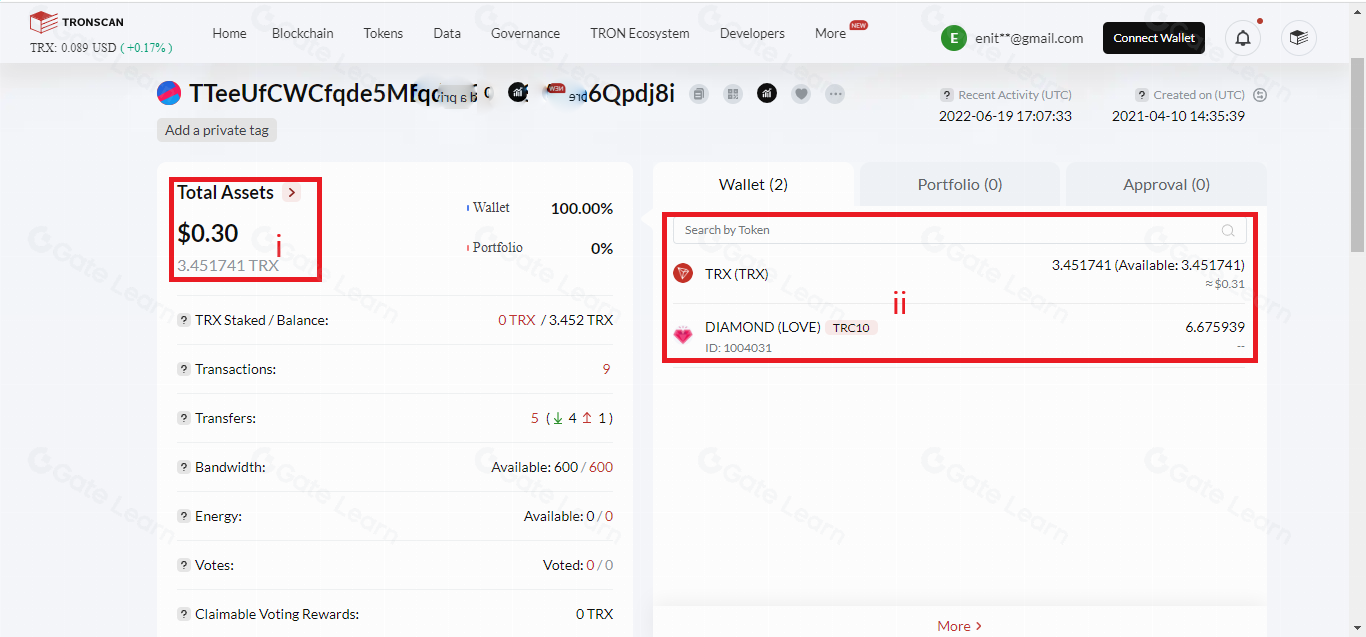
A connected address turns the explorer from a public search tool into a live account console. The account page shows TRX balances, TRC-10 and TRC-20 token holdings, transfer history, contract calls, and recent transaction status in one place. This matters on TRON because a single address touches stablecoin transfers, staking positions, governance votes, and smart contract approvals across the same account history.
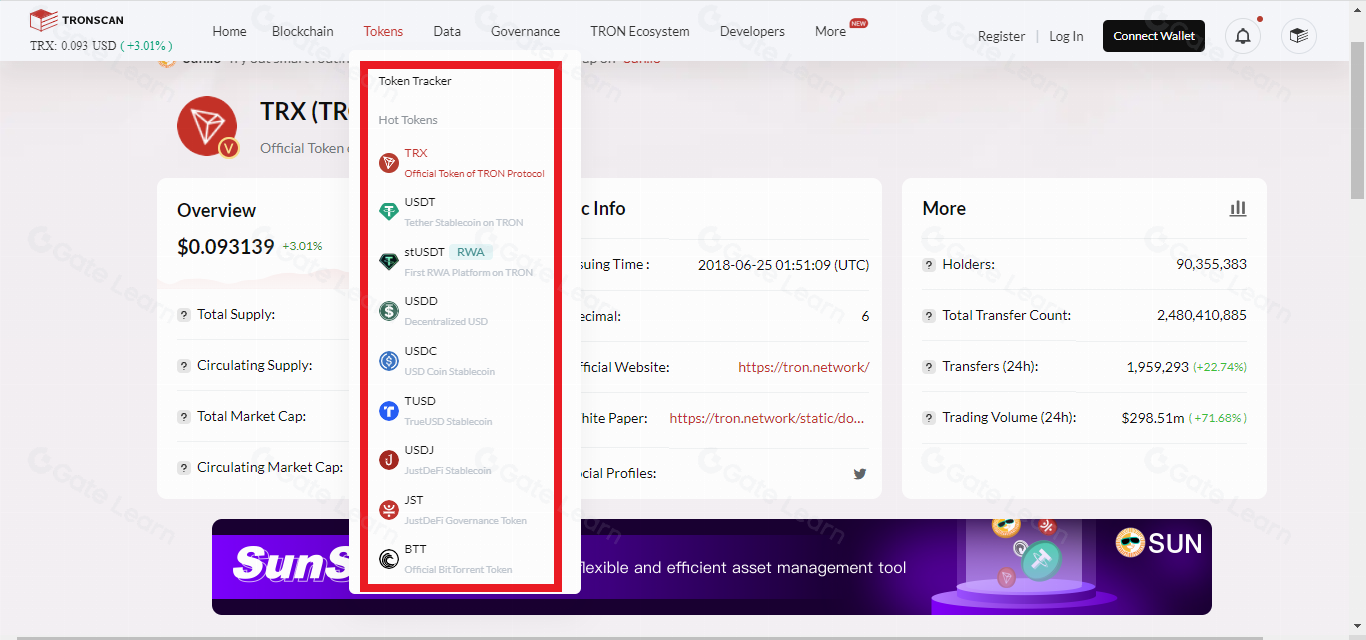
TRONSCAN also gives context that a standalone wallet screen misses. A user sees token tracker data, top accounts, resource consumption, contract pages, and transaction trends around the address being used. That wider view helps explain why a transfer succeeded, why a contract call consumed energy, or why a token balance changed after an interaction with DeFi, an NFT contract, or a bridge-related transaction.
How login works with TronLink and other supported methods
The normal login flow starts by choosing a supported wallet method, connecting the address, and confirming the site connection inside the wallet extension or mobile wallet. TronLink is the best-known TRON-native option, and TRONSCAN lists it within the TRON ecosystem as a wallet built for the network. Once the connection is approved, Tronscan wallet displays account-specific actions without taking custody of the private key.
Signing remains the important boundary. The explorer prepares a transaction request, the wallet presents the details, and the user signs from the wallet interface. A signature authorizes the exact operation, whether that is sending TRX, approving a TRC-20 token spend, staking resources, voting for Super Representatives, or interacting with a contract. The private key stays inside the wallet software or hardware signing environment.
TRX, TRC-20 balances, and stablecoin activity
TRON has heavy stablecoin usage, so a connected explorer view is especially useful for checking USDT movement, token contract addresses, and transaction confirmations. The token list separates native TRX from issued tokens, while transaction pages show sender, receiver, amount, timestamp, block, and status. For users who reconcile deposits, withdrawals, payroll, or exchange transfers, that record is easier to inspect in TRONSCAN than inside a compact wallet popup.
That said, Tronscan wallet also helps with token hygiene. Before interacting with a token, the account holder can inspect the contract page, holder distribution, transfer activity, and token tracker information shown by the explorer. Unknown tokens in an address do not require action; the useful habit is to inspect contract data before granting an approval or signing a swap-related transaction.
Energy and bandwidth explain the real transaction cost
TRON accounts use resources rather than a simple one-line gas fee model. Bandwidth covers basic transaction data, while energy is consumed by smart contract execution. TRX staking and resource delegation affect how much an account spends when sending tokens or calling contracts. The resource consumption pages and calculator make these costs visible before repeated contract activity becomes expensive.
This is where Tronscan wallet becomes more than a balance viewer. A USDT transfer, a JustLend DAO supply action, a SUN swap, or an NFT contract call follows a different resource pattern from a basic TRX transfer. Seeing energy use beside the transaction record helps a user understand whether a cost came from the protocol action, a shortage of staked resources, or a contract interaction that required more execution work.
Voting with TRX through Super Representative governance
TRON governance revolves around Super Representatives, votes, staking parameters, and proposals. A connected address lets the user move from reading governance data to acting on it. The explorer shows Super Representative rankings and vote-related pages, then the wallet signs the transaction that allocates voting power from staked TRX.
The vote workflow is practical for people who already hold TRX and want to participate directly from the explorer. They can inspect candidates, review vote distribution, check staking state, and sign a vote update without leaving the TRONSCAN environment. Tronscan wallet keeps governance actions close to the public data that explains them, which reduces the guesswork around who receives votes and how the account's resources are arranged.
Getting started from a fresh TRON address
A new user needs a funded TRON address, a compatible wallet, and enough TRX to handle resource needs. After installing or opening a supported wallet, they connect it to TRONSCAN, choose the account, and inspect the address page before signing anything. The first useful checks are simple: balance, token list, recent transfers, resources, and current permissions.
- Confirm the connected address matches the account expected in the wallet.
- Review TRX, USDT, and other token balances before starting a transfer.
- Open resource data to see available bandwidth and energy.
- Check account permissions before using multisig or delegated access.
- Read the transaction preview inside the wallet before signing.
After those checks, routine use becomes straightforward. The explorer supplies the searchable blockchain record, while the wallet supplies authorization. Tronscan wallet works best when the user treats every signature prompt as the final instruction being sent to the TRON network.
Permissions, multisig, and signed messages
TRON accounts support permission structures that matter for teams, treasuries, and higher-value accounts. TRONSCAN includes help and tools around multisig setup, account permissions, sign and verify, and broadcast transaction flows. These features make the connected wallet path useful for more than ordinary transfers, because an address owner can inspect authority settings and prepare transactions with clearer context.
Multisig adds operational discipline by requiring configured approvals before certain actions execute. The explorer view helps participants see account state and transaction details, while each signer uses a wallet to authorize the action assigned to them. For organizations using TRX, USDT, or TRON-based contracts, that separation between public account data and private signing is a core part of the workflow.
When a direct wallet app is enough
Many everyday actions fit inside a wallet app by itself. Sending a small amount of TRX, checking a QR code, or reviewing a recent payment does not always require a full explorer session. The explorer-connected route becomes more valuable when the user needs richer context: contract pages, token tracker data, governance voting, resource calculations, account permissions, or a transaction record that must be shared with another person.
TronLink, hardware signing setups, exchange withdrawal screens, and DeFi interfaces each serve a different moment in the same TRON workflow. Tronscan wallet is strongest when the question is about what happened on-chain, what a signature will submit, how resources were consumed, or how an address participates in votes and contracts. It is less about replacing a wallet app and more about pairing signing with the full explorer record.
Common mistakes around explorer-based signing
The biggest mistakes come from moving too quickly through connection prompts. A site connection is less sensitive than a transaction signature, but both deserve attention. The account holder should read the wallet prompt, check the receiving address or contract, and make sure the action matches the TRONSCAN page being used. Token approvals deserve special attention because they grant future spending permission to a contract.
Another frequent issue is confusing a pending or failed transaction with a missing balance. TRONSCAN transaction pages show whether a transaction confirmed, reverted, or consumed resources. If a transfer fails, the status and resource details provide the next clue. With Tronscan wallet, the most reliable habit is to diagnose from the transaction hash, not from the last screen the wallet displayed.
Frequently asked questions about Tronscan wallet
Does a Tronscan wallet login require creating a new TRON address?
A login does not require a new address if you already use a compatible TRON wallet. You connect an existing address through a supported method such as TronLink, then TRONSCAN reads public account data and prepares actions for that address. A new address is only needed when you are setting up a wallet for the first time or separating activity across different accounts.
What does it cost to send USDT after connecting Tronscan wallet?
USDT transfers on TRON consume network resources, mainly bandwidth and energy, rather than following a single fixed fee shown across every account. If the address has enough staked or delegated resources, the TRX cost falls. If resources are short, the transaction burns TRX to cover execution. The resource calculator and transaction preview help show the expected cost before signing.
Which wallet is commonly used with TRONSCAN for signing?
TronLink is the most common TRON-native wallet used with TRONSCAN, especially in browser-based workflows. Other supported connection methods may appear in the login menu, but TronLink is closely associated with TRON accounts, TRX, TRC-20 tokens, and dApp signing. The key point is that the wallet signs transactions while the explorer displays and submits network data.
Recovering access if the connected wallet is lost
Access depends on the wallet's recovery method, not on TRONSCAN. If the address was created in a self-custody wallet, recovery requires the wallet's seed phrase, private key, or configured backup method. TRONSCAN can still show the public address and transaction history, but it cannot restore signing control without the credentials managed by the wallet.
Does connecting Tronscan wallet expose my private key?
Connecting an address to TRONSCAN does not expose the private key. The explorer receives the public address and asks the wallet to sign specific messages or transactions. The sensitive key material remains inside the wallet environment. The important risk is signing an action you did not intend, so transaction details and contract approvals need careful review before confirmation.